
Eloralintide For Sale
When you explore newer peptide research, you will often come across compounds designed to study specific biological pathways. Eloralintide is one of the newer compounds receiving attention in metabolic research. It is also known by the development code LY3841136. Current research describesEloralintide For Sale as a selective, long-acting amylin receptor agonist.

You can think of amylin as a naturally occurring hormone involved in several processes connected with eating and energy balance. Researchers are studying how selective activation of amylin receptors may influence these processes. Eloralintide provides researchers with a specific compound for examining this pathway in controlled research settings.
The compound is being investigated primarily within metabolic and obesity-related research programs. Current clinical trials are examining eloralintide in adults with overweight or obesity, with some studies also involving type 2 diabetes.
For you as a researcher, this makes eloralintide an interesting compound for studying amylin biology. It also provides an opportunity to examine how selective amylin receptor activity compares with other approaches used in metabolic research.
Eloralintide is designed for once-weekly investigation in clinical research programs. This longer-acting profile is one reason researchers continue to examine the compound across different study designs. (Eli Lilly and Company).
Research into eloralintide has progressed beyond early laboratory investigation. A Phase 1 study evaluated its biological activity and tolerability, while later Phase 2 research examined its effects in adults with obesity or overweight.
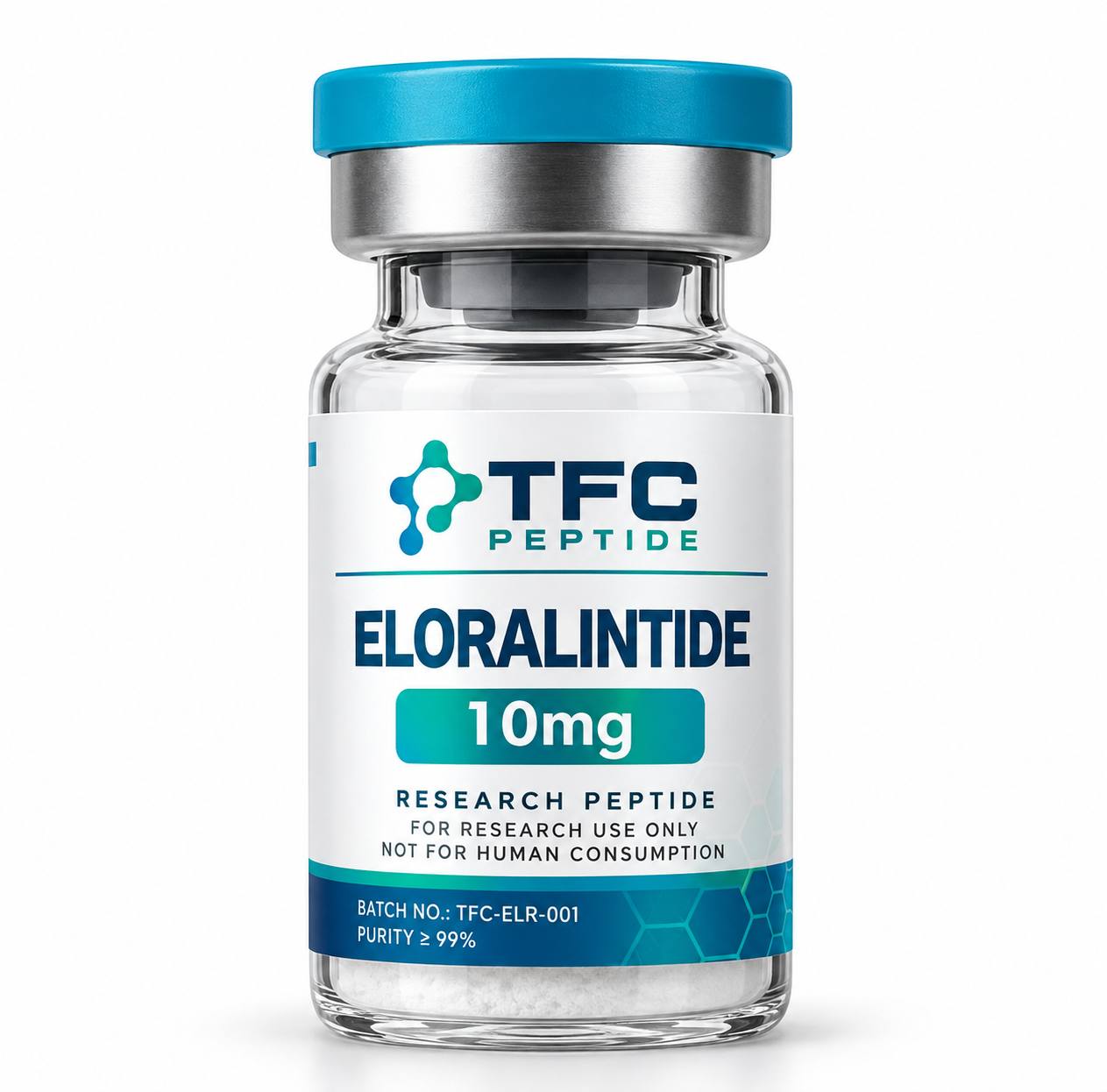
Eloralintide

The compound is now being evaluated through multiple Phase 3 clinical studies. These studies are examining different populations and research questions related to obesity, body weight, diabetes, sleep apnea, and other conditions.
You should view this research progress as evidence that eloralintide is an active area of scientific investigation. It does not mean that every proposed use has been established. Clinical research is still necessary before conclusions about safety, effectiveness, or approved medical use can be made.
As a research compound, eloralintide can therefore serve as a useful subject for controlled investigation into selective amylin receptor activity. Its growing clinical research program also makes it relevant to researchers following developments in metabolic science
Elora Works in Research
To understand why researchers are interested in eloralintide, it helps to start with amylin. Amylin is a hormone naturally produced alongside insulin by pancreatic beta cells. Researchers have studied its relationship with appetite, food intake, and metabolic regulation for many years.
Eloralintide was developed to selectively activate the amylin receptor pathway. This gives researchers a way to investigate the biological effects associated with amylin signaling without simply studying the naturally occurring hormone itself.
One area of interest is satiety, which refers to the feeling of fullness that can follow eating. Lilly describes eloralintide as having potential effects on calorie intake, with these effects thought to involve changes in satiety.
For research purposes, this pathway is particularly interesting because appetite and energy balance involve several interacting biological signals. Researchers can study how amylin receptor activation fits into this broader network.
You can also examine eloralintide alongside other metabolic compounds to better understand differences between biological pathways. This can be useful when researchers are investigating how multiple signaling systems influence body weight and energy regulation.
Importantly, eloralintide is not a GLP-1 receptor agonist. Its primary research target is the amylin receptor pathway. This distinction helps researchers separate different mechanisms when designing experiments or interpreting findings.
Current clinical development also includes studies examining eloralintide alongside incretin-based therapies. One Phase 3 study is evaluating eloralintide in people with persistent obesity who are already receiving weekly incretin therapy.
Researchers are also studying combinations involving eloralintide and tirzepatide. These studies are designed to explore how selective amylin activity may interact with GIP and GLP-1 receptor activity.
This combination research is important because metabolic regulation is rarely controlled by one biological pathway. Studying different mechanisms together can provide additional information about how these systems interact.
However, research findings should always be interpreted within the specific study design. Results from one population, dose, duration, or combination cannot automatically be applied to another setting.
For you, that means eloralintide can be viewed as a specialized research tool for investigating amylin-related signaling. Its mechanism gives researchers a defined biological pathway to examine while clinical development continues.
Elora in Current Scientific Research
Eloralintide has moved through several stages of clinical investigation, making it one of the more closely studied investigational amylin compounds. Early research provided information about its activity and tolerability, while later studies expanded the investigation into larger participant groups.
A Phase 2 study reported by Eli Lilly evaluated eloralintide in 263 adults with obesity or overweight and at least one obesity-related condition. The study did not include participants with type 2 diabetes.
According to Lilly’s reported results, treatment groups showed greater average weight reductions than placebo at 48 weeks. These findings supported continued clinical development and the move toward larger Phase 3 studies.
Current Phase 3 research is considerably broader. One study is evaluating eloralintide in adults with obesity or overweight without type 2 diabetes. That study has a planned enrollment of 1,980 participants.
Another Phase 3 study is examining adults with obesity or overweight who also have type 2 diabetes. Researchers are comparing eloralintide with placebo while monitoring body-weight outcomes and safety.
Research has also expanded into other populations. Current trials are investigating eloralintide in adults with obesity or overweight and obstructive sleep apnea. Another program is studying participants with obesity or overweight who have knee osteoarthritis and pain.
Researchers are also examining eloralintide in people who remain affected by obesity despite treatment with weekly incretin-based therapy. This provides another research setting for understanding the compound’s potential role within broader metabolic treatment strategies.
A separate Phase 1 study is investigating how eloralintide behaves in people with different levels of liver impairment. The researchers are evaluating how the compound is absorbed and handled by the body.
These studies show the range of questions currently surrounding eloralintide. Researchers are not studying only one outcome or one population. Instead, they are examining the compound across several controlled clinical settings.
For research professionals, this growing evidence base can provide useful background when evaluating amylin receptor biology. You can also compare emerging findings with research involving other metabolic pathways.
At the same time, eloralintide remains investigational. Its ongoing clinical trials mean that researchers are still collecting evidence about its safety, tolerability, effectiveness, and appropriate clinical applications.
Eloralintide For Sale for Research Applications
Eloralintide can be particularly interesting when you are studying metabolic signaling and amylin receptor activity. Its selective mechanism gives researchers a defined pathway for controlled laboratory or scientific investigation.
You can use research involving eloralintide to explore questions surrounding appetite regulation, satiety signaling, calorie intake, and energy balance. These areas are closely connected, but each involves multiple biological mechanisms.
Because eloralintide is being investigated as a long-acting amylin receptor agonist, researchers can also examine how sustained receptor activity behaves over time. The current clinical program describes the compound as suitable for once-weekly investigation.
Another research opportunity involves studying eloralintide alongside other metabolic compounds. Current clinical programs are already investigating combinations with incretin-based therapies, including tirzepatide.
This makes the compound relevant for comparative research. You can examine different receptor pathways and consider how their biological effects may differ under controlled conditions.
Eloralintide research can also support broader investigations into the relationship between metabolic signaling and body-weight regulation. Researchers may examine how changes in one pathway interact with other physiological systems.
When working with any investigational peptide, proper laboratory controls remain important. Researchers should maintain appropriate documentation, handling procedures, analytical testing, and experimental conditions.
You should also distinguish research observations from established medical conclusions. A clinical trial result describes what researchers observed under specific study conditions. It does not automatically establish that the same result will occur in every person or situation.
Eloralintide For Sale is currently undergoing Phase 3 clinical investigation in several areas. These studies are designed to provide additional evidence about its potential effects and safety profile.
For that reason, this compound is best presented as an investigational research subject rather than an established treatment. This approach keeps product information aligned with the current scientific status of eloralintide.
If you are researching emerging peptide technologies, eloralintide offers a focused way to investigate selective amylin receptor signaling. Its growing clinical research program also provides a useful source of information for understanding its development.
Please note that eloralintide is an investigational compound and is not presented here as an approved treatment. Research materials should be used only in accordance with applicable laws, regulations, institutional requirements, and appropriate scientific protocols.
The scientific story around eloralintide continues to develop. As larger and longer clinical studies produce additional results, researchers will gain a clearer understanding of its pharmacology, safety, tolerability, and potential applications.
For now, its role remains firmly within ongoing scientific investigation. That makes eloralintide an interesting compound for researchers following advances in amylin biology, metabolic science, and next-generation peptide research.
| Quantity | 1Kit, 5Kits, 10Kits, 20Kits |
|---|
Be the first to review “Eloralintide For Sale 10mg”
Related products

Retatrutide
Tirzepatide
Tirzepatide
Uncategorized
Semaglutide
Tirzepatide
Tirzepatide
Tirzepatide
Reviews
There are no reviews yet.