
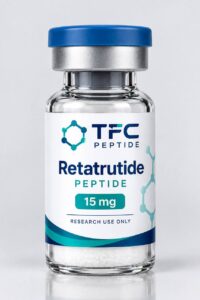
Retatrutide for sale 15mg * 10 vials

$115.00
Shipping cost less than 25kits is $60, reach 25kits shipping free.
We use US special line for shipping. 12-15 days arrive you. DDP US.
Final dispatch is USPS or FEDEX
EU countries have EU special line final dispatch by DHL, 15 days .
UK have UK special line, final dispatch is Royal mail. 7-10days
Special line means shipping agent transfer goods from China to your country which this part have no tracking update(some shipping agent have their own system have track path), when arrived destination customs finished clearance, then transfer to the native express as final dispatch.
When you see the tracking numeber offered to you which have update, that means it finished customs clearance, only need to wait dispatching to your hand.
What Is Retatrutide Peptide?
Retatrutide for sale is an investigational peptide that has attracted considerable attention in modern metabolic research. You may also see retatrutide identified by its development name, LY3437943. Researchers are studying this compound because it interacts with three important hormone receptors involved in metabolic regulation. These receptors include glucose-dependent insulinotropic polypeptide, glucagon-like peptide-1, and glucagon receptors. This three-target activity gives retatrutide its commonly described classification as a triple hormone-receptor agonist. (New England Journal of Medicine)
You can think of retatrutide as a research compound designed to explore several metabolic pathways simultaneously. Instead of focusing on one receptor pathway, researchers can investigate how combined GIP, GLP-1, and glucagon receptor activity influences energy balance. This makes the compound particularly interesting for researchers studying obesity, glucose metabolism, appetite regulation, and related metabolic processes.
Retatrutide for sale is a synthetic peptide engineered for prolonged activity in research settings. Published research describes it as a single peptide connected to a fatty diacid component. This structural design contributes to its extended activity and supports investigation using once-weekly administration schedules in clinical research.
One reason retatrutide continues to receive research attention is its distinctive mechanism. GIP and GLP-1 pathways are already well known within metabolic research. Glucagon adds another biological pathway that researchers can study alongside those incretin-related signals. Combining these pathways allows scientists to investigate how multiple hormonal signals may work together.
If you are researching emerging metabolic compounds, retatrutide provides an interesting example of multi-receptor peptide research. You can explore the published clinical evidence
Importantly, retatrutide should not be confused with an approved medication simply because it has been evaluated in human clinical trials. Its development and research status mean that ongoing studies remain important for understanding its long-term safety, effectiveness, and appropriate clinical applications.
For research suppliers, clear product information is especially valuable because customers may encounter many different descriptions online. A straightforward description should identify retatrutide as an investigational research peptide without overstating what current evidence proves.
You can therefore approach retatrutide as a compound of interest within the expanding field of metabolic peptide research. Its three-receptor mechanism gives researchers several pathways to investigate while providing a useful model for understanding how coordinated hormonal signaling may influence metabolic processes.
Retatrutide and Metabolic Research
Retatrutide has become an important subject within metabolic research because of its ability to activate three hormone receptors. These include GIP, GLP-1, and glucagon receptors, which are involved in processes connected with appetite, glucose regulation, energy balance, and metabolism.
You may find the three-pathway mechanism particularly interesting when comparing retatrutide with compounds that target fewer receptors. Researchers are investigating whether activating these pathways together can produce different biological effects from targeting individual pathways separately.
GLP-1 signaling has received extensive attention because of its involvement in appetite regulation and glucose-dependent insulin secretion. GIP is another incretin hormone that participates in nutrient-related metabolic signaling. Glucagon has additional roles connected with energy availability and substrate metabolism. Retatrutide for sale brings these three signaling pathways together within one investigational peptide.
This combination gives researchers an opportunity to examine how different hormonal signals interact. Instead of viewing appetite and metabolism through a single pathway, scientists can investigate a broader biological network. That approach may help expand understanding of how hormonal signaling contributes to body-weight regulation and metabolic health.
A phase 2 randomized clinical trial published in the New England Journal of Medicine evaluated retatrutide in adults with obesity. The study included 338 participants and examined several retatrutide dose groups over 48 weeks. Researchers reported substantial reductions in body weight across the treatment groups compared with placebo. Gastrointestinal events were among the most frequently reported adverse events, and these events were generally mild to moderate in the study.
The same research also reported dose-dependent changes in heart rate, with increases peaking during the study before declining later. These findings demonstrate why ongoing research remains important when evaluating investigational compounds. Results from one clinical study provide useful evidence, but they do not automatically establish long-term safety or suitability for every population.
You can also see why researchers continue examining retatrutide through additional clinical studies. Questions about long-term outcomes, tolerability, appropriate dosing strategies, and broader patient populations require continued investigation.
For research purposes, Retatrutide for sale can therefore serve as an example of how modern peptide science is exploring multi-receptor approaches. Its development reflects a growing interest in compounds capable of influencing several interconnected metabolic pathways.
When reading about retatrutide, you should separate research findings from promotional statements. Published clinical evidence provides measurable information, while future studies will determine how those findings translate into broader medical applications.
Research Considerations for Retatrutide for sale
When you evaluate retatrutide as a research compound, understanding its current development status is essential. Retatrutide has been investigated in clinical trials, but it remains an investigational compound rather than an established medication for routine personal use. This distinction helps you interpret product information more accurately.
Researchers have studied retatrutide in connection with obesity and metabolic regulation. In the phase 2 trial, participants received different once-weekly retatrutide regimens and were monitored for changes in body weight, metabolic measurements, and safety outcomes. The study demonstrated meaningful biological activity, while also documenting adverse events that researchers need to consider.
You should therefore treat retatrutide as a compound intended for legitimate scientific investigation. Research environments may examine its molecular characteristics, receptor activity, pharmacological behavior, and biological effects. Researchers can also use published findings to understand how triple-receptor agonism differs from single or dual receptor approaches.
Another important consideration is product quality. Research peptides require appropriate identity, purity, and analytical documentation. Depending on your research requirements, useful documentation can include certificates of analysis, analytical testing information, batch identification, and relevant storage documentation.
You may also encounter different strengths or presentation formats when researching retatrutide products. Product strength should always be clearly separated from clinical dosing information. A labeled research quantity does not establish an appropriate dose for human administration.
Storage and handling requirements should likewise follow the documentation provided for the specific research material. You should avoid assuming that every peptide has identical stability characteristics. Factors such as formulation, container closure, temperature, moisture, and handling conditions can affect research material.
Safety is another important consideration when evaluating published retatrutide research. Clinical studies have reported gastrointestinal adverse events, particularly during dose escalation. The phase 2 study also observed dose-dependent increases in heart rate.
These findings highlight why investigational peptides should not be described with guarantees about outcomes. Research results can provide valuable information, but they cannot guarantee that an individual will experience the same effects.
For researchers exploring emerging metabolic compounds, retatrutide offers an interesting subject because it combines three distinct receptor targets within one peptide. Its development also illustrates how researchers are investigating increasingly sophisticated approaches to metabolic regulation.
Ultimately, you should view retatrutide through the lens of scientific research rather than simple product marketing. Clear labeling, accurate documentation, responsible handling, and evidence-based information can help maintain a professional research environment.
Research-use notice: Retatrutide is an investigational compound. This product description is provided for research and educational purposes and is not medical advice, a treatment recommendation, or a claim of regulatory approval. Retatrutide should not be presented as an approved therapy based solely on clinical-trial findings.
Be the first to review “Retatrutide for sale 15mg * 10 vials”
Related products

Semaglutide
Tirzepatide
BPC 10mg + TB 10mg
Tirzepatide
CJC-1295 NO DAC
CJC-1295 with DAC
Retatrutide
Tirzepatide
Reviews
There are no reviews yet.